

Search for the Uffizi Gallery statue of David and you've hit one of the most common mix-ups in European travel — one that sends thousands of visitors to the wrong ticket gate every year. Let's settle it in one line: Michelangelo's original David is not in the Uffizi. It stands in the Galleria dell'Accademia on via Ricasoli, about 15 minutes away on foot. The Uffizi and the Accademia are both essential Florence museums; they are simply different buildings with different tickets.
The good news: the mix-up is cheap to fix and even cheaper to enjoy. A free full-size replica of David stands right next to the Uffizi, a combo ticket covers both museums in one purchase, and the Uffizi has a Michelangelo of its own that most David-hunters walk straight past. This guide covers all of it, with figures cross-checked against the official Uffizi website (uffizi.it).
Quick Summary: David in Florence
| Where | What you see | Cost |
|---|---|---|
| Galleria dell'Accademia, via Ricasoli 58/60 | The original marble David by Michelangelo | Timed ticket (book ahead; check official info) |
| Piazza della Signoria, outside Palazzo Vecchio | Full-size marble replica, in David's original outdoor location | Free, 24/7 |
| Piazzale Michelangelo | Bronze replica with a panoramic view over Florence | Free, 24/7 |
| Uffizi Gallery | No David — but Michelangelo's Doni Tondo painting | €25 same day / €29 advance (uffizi.it) |
Where the Original David Actually Is
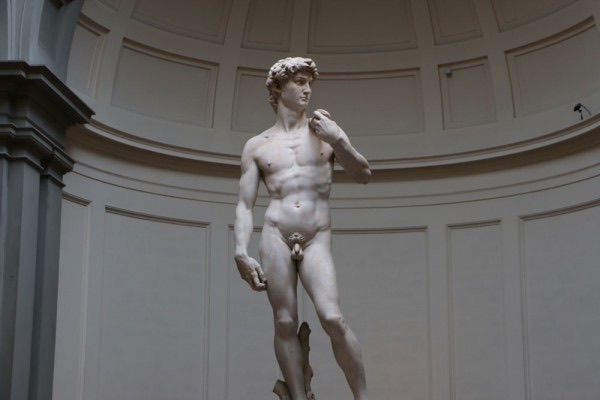
The original stands under a purpose-built skylit tribune in the Galleria dell'Accademia, via Ricasoli 58/60 — north of the Duomo, a 15-minute walk from the Uffizi. The statue originally stood outdoors on Piazza della Signoria and was moved indoors in the 19th century to protect the marble; the Accademia's display has been David's home ever since, with a plaster-cast tradition tied to the museum's history as an art academy.
The Accademia is a much smaller museum than the Uffizi — most visitors spend about an hour — but it uses the same timed-entry logic: in high season, walk-up tickets are a gamble and booked slots are the reliable route. Hours and prices change, so check the museum's official information when you book rather than trusting third-hand numbers.
The Free David: Piazza della Signoria
Here's the twist that softens the disappointment: a full-size marble replica of David stands exactly where the original stood for centuries — outside the entrance of Palazzo Vecchio, on Piazza della Signoria, literally around the corner from the Uffizi's courtyard. It's free, open-air, viewable at any hour, and it occupies the political stage the statue was made for: David as the symbol of the defiant Florentine Republic, glaring toward Rome.
Ten steps away, the Loggia dei Lanzi adds a free open-air sculpture gallery, and Ponte Vecchio is two minutes further. If your interest in David is "see it, photograph it, understand it," the piazza replica plus the story delivers 80% of the experience for €0. A second replica — bronze, dark, dramatic — presides over Piazzale Michelangelo, the panoramic terrace across the Arno, and makes a great sunset stop.

What Michelangelo IS at the Uffizi: The Doni Tondo
Skipping the Uffizi because "David isn't there" would be its own mistake. The Uffizi holds the Doni Tondo (c. 1506) — Michelangelo's only surviving completed panel painting anywhere in the world. It's a circular Holy Family painted with a sculptor's logic: Mary twists back over her shoulder in a marble-hard spiral, the colours are startlingly sharp, and the carved frame is part of the work. See David in the morning and the Doni Tondo in the afternoon and you've covered Michelangelo the sculptor and Michelangelo the painter in one day — something no other city can offer. More in our guide to Caravaggio, da Vinci & Michelangelo at the Uffizi.
How to See Both Museums: The Combo Ticket
The clean solution to the whole David question is a combo ticket. On Tiqets, the Uffizi & Accademia reserved-entry combo starts from €69.50, with timed slots for each museum — one purchase, both bookings, no juggling two official systems that sell out on different days. Booked separately, per the official Uffizi website (uffizi.it), Uffizi entry alone is €25 same-day or €29 in advance; the Accademia is a separate official ticket on its own site.
Uffizi Only
from €25 / adult
- Botticelli, Leonardo, Doni Tondo, Caravaggio
- Free David replica outside — no ticket needed
- Best for: one-museum trips, tight budgets
Uffizi + Accademia Combo
from €69.50 / adult
- Reserved timed entry to both museums
- Original David + the Uffizi masterpieces
- One booking instead of two sell-out lotteries
- Best for: first visits of 2+ days
Guided Options
from €62 / adult
- Uffizi guided tour; combo and private variants exist
- Context for the Doni Tondo and the David story
- Best for: short stays, art-history lovers
Full comparison and current availability: Uffizi + Accademia combo tickets and the general Uffizi ticket prices guide.
Skip the ticket-office queue
Compare timed-entry tickets, audio guides and tours with instant confirmation and free cancellation on most options.
The 15-Minute Walk: Uffizi to Accademia
Both museums sit in the pedestrianised centre — walking beats any bus or taxi. The route is simple:
- From the Uffizi courtyard, walk into Piazza della Signoria — pause at the David replica outside Palazzo Vecchio for the "before" photo.
- Take Via dei Calzaiuoli north, the straight shopping street toward the cathedral.
- At Piazza del Duomo, keep the cathedral on your left and round the east end toward the north side.
- Turn up via Ricasoli, which runs straight to the Accademia at number 58/60 — the queue outside marks the door.
Allow 15 minutes at a stroll, more if the Duomo tempts you into photos. Time your slots with a buffer: an 8:15 Uffizi entry with 2.5–3 hours inside connects comfortably to an early-afternoon Accademia slot, with lunch in between.
Timing a Two-Museum Day
- Book the Uffizi first, at 8:15. It's the bigger museum and the one where an early slot changes the experience most — the Botticelli rooms empty at opening, packed by 10:00.
- Accademia after lunch. A slot around 13:00–15:00 gives you a comfortable buffer even if the Uffizi holds you longer than planned.
- Avoid Mondays entirely — the Uffizi is closed, and demand piles onto Tuesday. Wednesday and Thursday are the calmest days for both museums.
- Free first Sundays cut both ways. Entry costs nothing but slots can't be reserved and queues are the longest of the month — fine in winter, punishing in summer.
- Piazzale Michelangelo at sunset closes the day properly: the bronze David, the whole city below, and no ticket involved.
Accademia Basics (Keep It Simple)
- Size: small — David, Michelangelo's unfinished sculptures known as the Prisoners, and a paintings collection; about an hour for most visitors.
- Booking: timed entry, sells out in high season like the Uffizi; reserve ahead.
- Closed Mondays — like the Uffizi, so plan both museums Tuesday–Sunday.
- Verify before you go: hours, prices and free-entry days change; check the museum's official channels or your ticket confirmation rather than relying on blogs — this one included.
The Sculpture the Uffizi DOES Have
Calling the Uffizi "the painting museum" undersells it — the building is threaded with ancient sculpture from the Medici collection, and some of it was more famous than any painting for centuries:
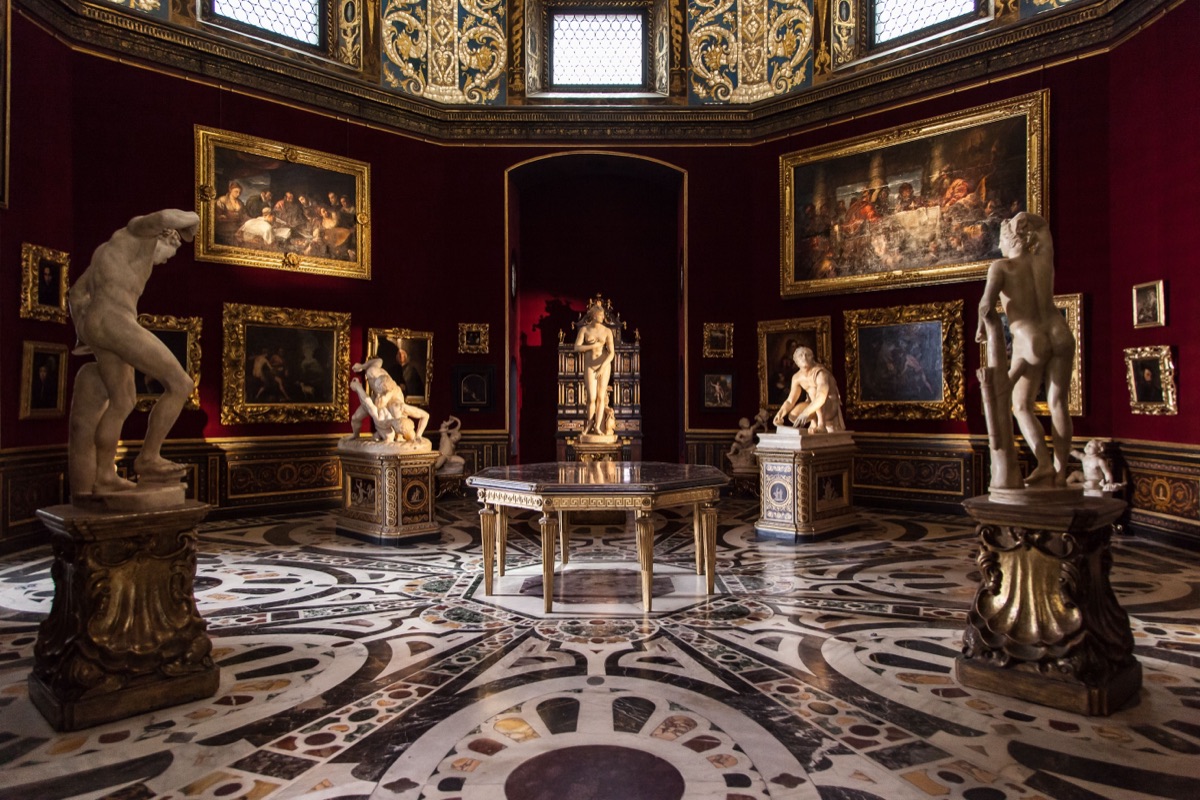
- Medici Venus — the ancient marble Venus in the Tribuna, the octagonal treasure-room designed by Buontalenti in 1584. Grand Tour travellers crossed Europe to see her; you view the room from its doorways.
- Sleeping Ariadne — the reclining ancient figure that anchors one of the gallery's red-walled sculpture rooms.
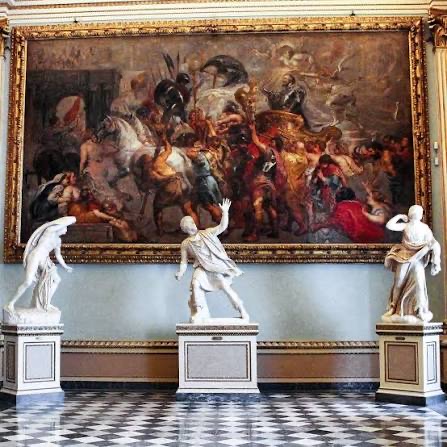
- The corridor statues — Roman emperors, gods and copies of Greek originals lining the East and West corridors under frescoed ceilings, collected by the Medici and donated to Florence with the whole collection by Anna Maria Luisa de' Medici in 1737.
For the full route past all of it, see inside the Uffizi Gallery; for the paintings themselves, start with our must-see paintings guide.
Uffizi Gallery Statue of David: The Bottom Line
There is no Uffizi Gallery statue of David — and once you know that, Florence hands you a better plan than the myth ever did. See the free replica on Piazza della Signoria the moment you arrive, book the Uffizi for Botticelli, Leonardo, Caravaggio and Michelangelo's Doni Tondo, then walk 15 minutes to the Accademia for the original marble. A combo ticket from €69.50 on Tiqets books both timed entries in one go. Two museums, three Davids if you count Piazzale Michelangelo at sunset, zero wasted bookings.
Frequently Asked Questions
Is the statue of David in the Uffizi Gallery?
No. Michelangelo's original David stands in the Galleria dell'Accademia on via Ricasoli, about a 15-minute walk from the Uffizi. The confusion is common — both are top Florence museums — but they are separate buildings with separate tickets.
Where can I see David for free in Florence?
Two replicas cost nothing: a full-size marble copy outside Palazzo Vecchio on Piazza della Signoria (steps from the Uffizi entrance), and a bronze cast at Piazzale Michelangelo, the panoramic terrace above the city.
Is there any Michelangelo in the Uffizi?
Yes — the Doni Tondo (c. 1506), his only surviving completed panel painting. If you want Michelangelo the painter, go to the Uffizi; for Michelangelo the sculptor, go to the Accademia.
Is there a combo ticket for the Uffizi and the Accademia?
Yes. A reserved-entry combo covering both museums starts from €69.50 on Tiqets, with separate timed slots for each. It solves the David confusion in one purchase and saves juggling two booking systems.
How far is the Accademia from the Uffizi?
About 15 minutes on foot: north past the Duomo and up via Ricasoli. Both sit inside Florence's pedestrian centre, so walking is faster than any transport.
Can I see the Uffizi and David on the same day?
Comfortably. Book the Uffizi at 8:15, spend 2.5–3 hours, walk 15 minutes to the Accademia for an early-afternoon slot. Doing the reverse also works — the key is booking timed entries for both rather than trusting same-day queues.
Does the Uffizi have important sculptures of its own?
Yes — the ancient Medici Venus in the octagonal Tribuna, the Sleeping Ariadne, and Roman statues from the Medici collection lining the corridors. The Uffizi is a serious sculpture museum; it just doesn't have David.
Do I need to book the Accademia in advance?
In high season, effectively yes — like the Uffizi, it uses timed entry and sells out. Check current hours and prices on the museum's official channels before you go, or use a combo ticket with reserved slots for both.
Prices and opening hours mentioned on this page are based on the official Uffizi website (uffizi.it) and reseller listings at the time of writing. They can change without notice — always double-check on the official website before you travel.