

Inside the Uffizi Gallery, the building competes with the art. Giorgio Vasari built it between 1560 and 1580 as offices — uffizi — for Cosimo I de' Medici's magistrates, a U-shaped administrative machine wrapped around a long courtyard, and the Medici gradually turned its top floor into the world's first great art gallery. What you walk through today is that history intact: frescoed ceilings above ancient statues, windows framing the Arno, and dozens of rooms of paintings arranged in chronological order.
This guide is the walkthrough to read before you go: how the floors are organised, what the corridors and the Tribuna actually look like, where the café terrace and cloakroom are, how timed entry works once you're through the door, and two ready-made routes for two hours or four. Hours and prices are cross-checked against the official Uffizi website (uffizi.it): Tuesday–Sunday 8:15–18:30, €25 same-day / €29 in advance.
Quick Summary: The Building at a Glance
| Element | What it is |
|---|---|
| The building | Vasari, 1560–1580; Medici government offices turned gallery; collection donated to Florence by Anna Maria Luisa de' Medici in 1737 |
| Where the art is | Top two floors (first + second), chronological route through dozens of rooms |
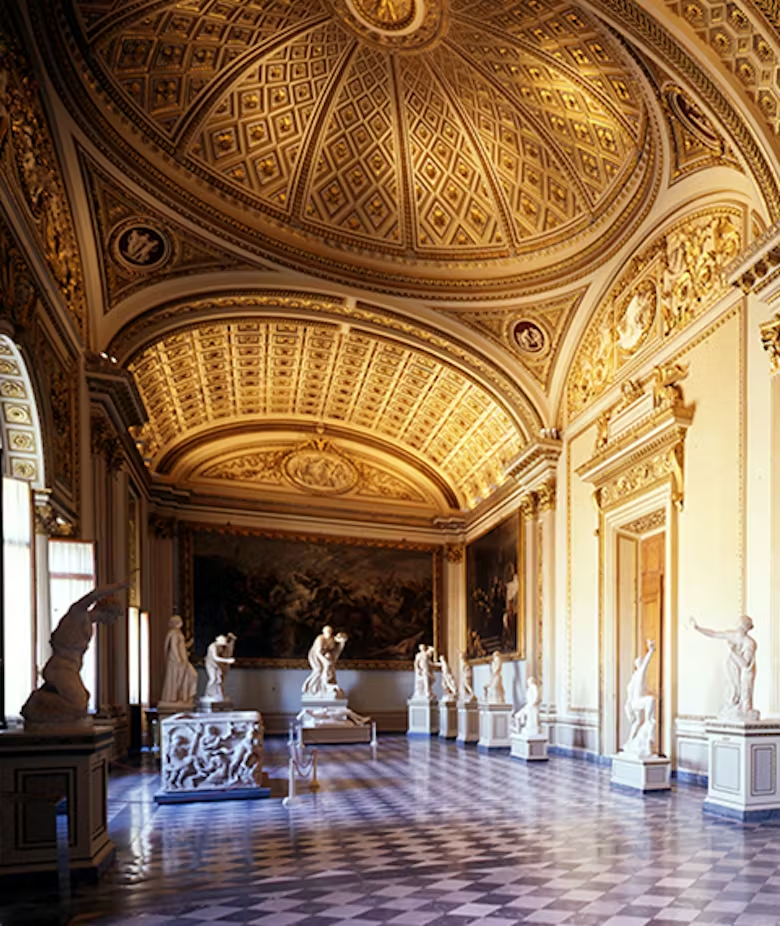
| Corridors | East and West corridors lined with ancient sculpture under frescoed ceilings |
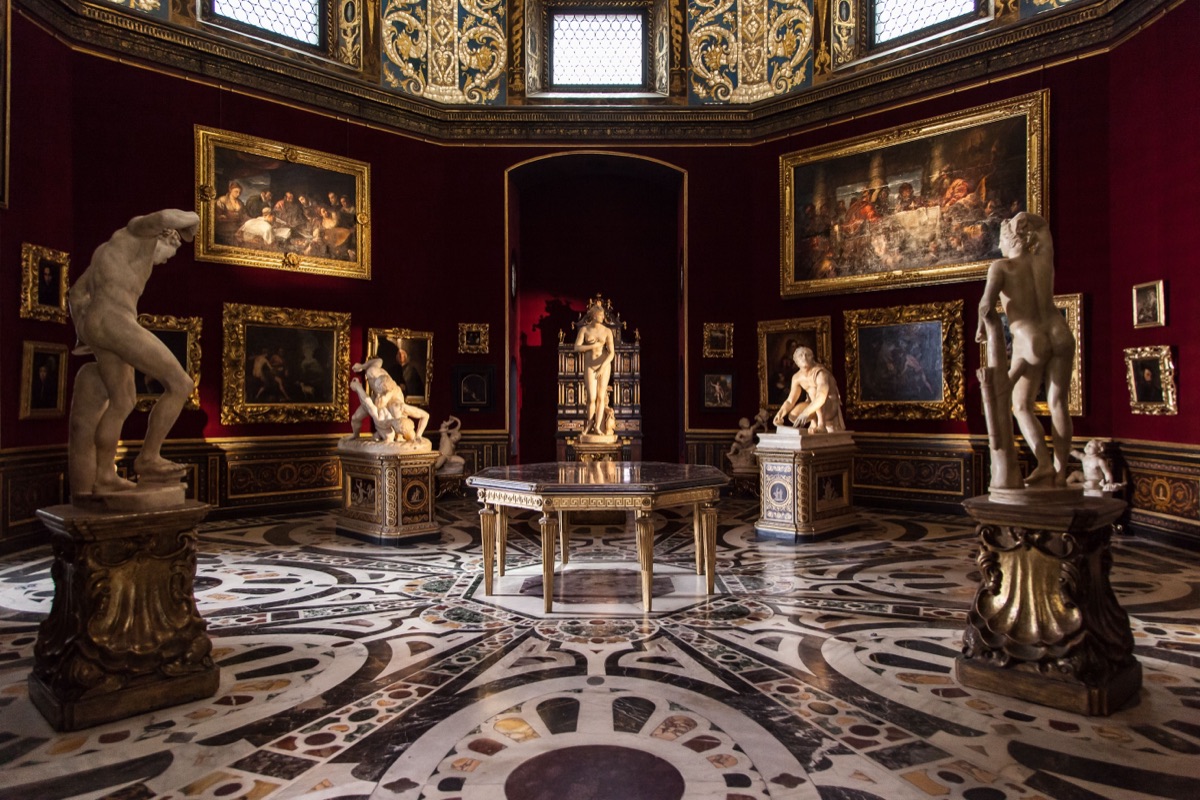
| Tribuna | Octagonal treasure room (Buontalenti, 1584) — viewed from its doorways |
| Best window view | Arno + Ponte Vecchio, from corridor windows near room 35 / second-floor corridor |
| Break spot | First-floor café terrace facing Palazzo Vecchio's tower |
The Layout: How the Uffizi Is Organised
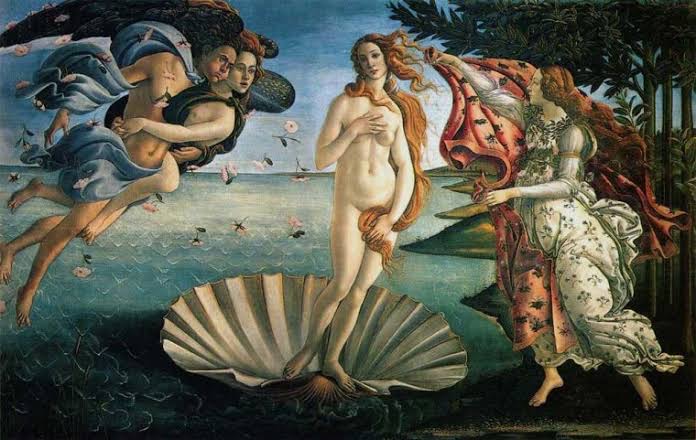
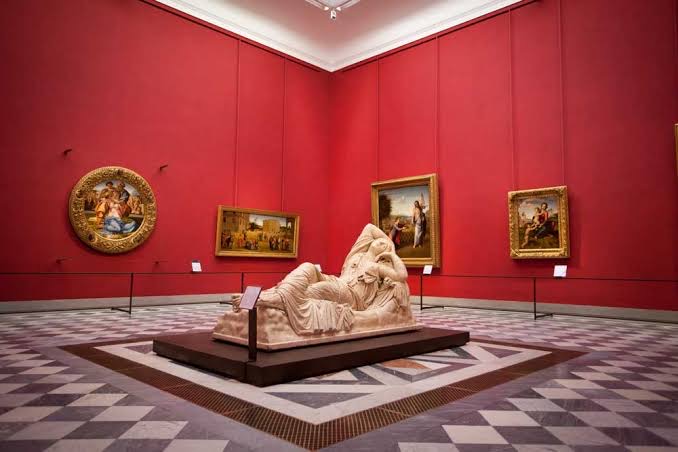
The logic is simple once you see it. The gallery occupies the first and second floors of Vasari's U; the route starts at the top and works through art history in order — 13th-century gold-ground Madonnas by Cimabue and Giotto first, then the early Renaissance, Botticelli, Leonardo, the High Renaissance rooms with Michelangelo's Doni Tondo and Raphael, Titian's Venetians, and finally Caravaggio and the Baroque. Walking the numbered rooms in sequence is a three-century timeline; no map-planning needed.
Two consequences worth knowing. First, the most famous room — Botticelli's — comes fairly early, which is why the 8:15 crowd sprints there. Second, the collection runs to the 20th century, so pace yourself: the route is longer than the highlights list suggests, and "dozens of rooms" is not a figure of speech. Full painting-by-painting priorities are in our must-see paintings guide.
The Corridors: The Gallery's Spine
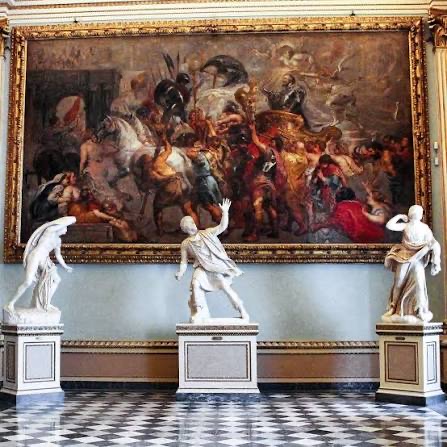
The East and West corridors — long, light-flooded, running the length of each wing — are where the Uffizi feels most like the Medici's private world. Ancient Roman statues from the family's collection line the walls: emperors, gods, copies of Greek originals. Above them run frescoed ceilings of grotesque decoration — painted, panel by panel, with mythological scenes and ornament that most visitors never look up to see. Look up.
The corridor windows are an attraction in their own right. On the stretch near room 35 and along the second-floor corridor, they frame the Arno and Ponte Vecchio like hung paintings — the best free photograph in the building, sharpest before midday haze. From here you're also tracing the start of the Vasari Corridor, the elevated Medici passageway of 1565 that runs from Palazzo Vecchio through the Uffizi and over Ponte Vecchio to Palazzo Pitti — reopened in December 2024 and bookable as a combined ticket.
The Tribuna: The Room Inside the Museum
Halfway along the route you reach the Uffizi's inner sanctum: the Tribuna, an octagonal chamber designed by Bernardo Buontalenti in 1584 to hold the Medici's most precious things. Red velvet walls, a domed ceiling, and at its heart the ancient Medici Venus — for two centuries the most famous statue in Europe, the climax of every Grand Tour. To protect the room, you view it from its doorways rather than walking in. That limitation is a gift: no crowd inside the frame, and the room reads as its makers intended — a jewel box seen, not entered.
The Café Terrace: The Best Break in Florence
On the first floor, the cafeteria opens onto a terrace that looks straight at Palazzo Vecchio's tower — close enough to count the crenellations. Coffee costs museum prices; the view doesn't come cheaper anywhere. Time it as your hinge between floors: art-full morning, terrace espresso, second wind. On a clear day this is the photograph people mistake for a drone shot.
Practical Life Inside the Gallery
- Cloakroom: free, near the entrance — large bags and backpacks must be checked. Umbrellas and liquids beyond small bottles don't go in. Travel light and you skip the queue twice.
- Security and entry flow: booked tickets have a 15-minute entry window; arrive early, clear airport-style screening, then head up to the route's start. Entrance doors are historically numbered — Door 1 priority/reserved pickup, Door 3 main entrance with reservation, Door 2 same-day sales — but follow the signage on the day.
- Accessibility: elevators offer an alternative to the staircases, and per the official Uffizi website (uffizi.it) disabled visitors and a companion enter free. Ask staff for the step-free route and check uffizi.it for current arrangements before you travel.
- Toilets: available inside — use one when you pass it; backtracking through a chronological route is the classic time-waster.
- Photos: allowed without flash; tripods and selfie sticks are banned.
Tickets themselves are the other half of a smooth visit: €25 same-day / €29 advance official, €16 after 16:00, with reseller bundles from €25 on Tiqets — compare in our ticket prices guide and check current opening hours before you book.
Skip the ticket-office queue
Compare timed-entry tickets, audio guides and tours with instant confirmation and free cancellation on most options.
Two Ready-Made Routes
The 2-Hour Highlights Route
- Enter at 8:15, cloakroom, straight up to the route's start.
- Five minutes with Giotto and Cimabue — the "before" picture.
- Botticelli rooms early, before the groups: Birth of Venus, Primavera.
- Leonardo: Annunciation, then the unfinished Adoration of the Magi.
- Tribuna doorway pause; corridor windows for the Ponte Vecchio view.
- Michelangelo's Doni Tondo and Raphael's Madonna of the Goldfinch.
- Titian's Venus of Urbino, then finish with Caravaggio's Medusa and Bacchus.
The 4-Hour Full Walk
- Same start, but walk the rooms in strict order — the chronology is the point.
- Add real time in the corridors: statues, ceilings, all the window views.
- Café terrace break at the halfway mark (first floor).
- Second half: Titian and the Venetians, Artemisia Gentileschi's Judith Slaying Holofernes, the three Caravaggios, and whatever later rooms pull you in — Rubens surprises most visitors.
For the artist-by-artist version of these stops, see Caravaggio, da Vinci & Michelangelo at the Uffizi; if you'd rather follow a licensed guide through the same rooms, compare a guided tour or the audio tour options.
What Surprises First-Timers
- The scale. Photos suggest a big gallery; the reality is a route through dozens of rooms across two floors. Comfortable shoes are not optional.
- The ceilings. Half the decoration is above eye level, and almost nobody looks up.
- The sculpture. "The painting museum" is threaded with ancient marble — the Sleeping Ariadne reclining in a red-walled room, emperors down every corridor.
- The windows. The Arno-and-Ponte-Vecchio view stops people mid-corridor as reliably as any canvas.
- What's missing. Yes — David is at the Accademia, not here. Our Statue of David guide sorts that out, replica included.
Inside the Uffizi Gallery: The Bottom Line
Inside the Uffizi Gallery you get three museums for one ticket: a chronological painting collection from Giotto to Caravaggio, a Medici sculpture gallery in the corridors and the Tribuna, and a piece of Renaissance architecture with the best window views in Florence. Book a timed slot — 8:15 or after 16:00 — travel light for the cloakroom, pick the two-hour or four-hour route, and look up at least once per corridor. The building was designed to impress the people walking through it in 1580; it hasn't stopped since.
Frequently Asked Questions
What is inside the Uffizi Gallery?
Two upper floors of art arranged chronologically — from Giotto's gold-ground altarpieces through Botticelli, Leonardo, Michelangelo, Raphael and Titian to Caravaggio — plus sculpture-lined corridors with frescoed ceilings, the octagonal Tribuna, corridor windows over the Arno and Ponte Vecchio, and a café terrace facing Palazzo Vecchio.
How many rooms does the Uffizi have?
The main route runs through dozens of rooms across the top two floors of Vasari's building. You don't need to see them all: a highlights visit covers 10–15 rooms, a full walk takes 2.5–4 hours.
Can you go inside the Tribuna?
No — the octagonal Tribuna, designed by Buontalenti in 1584, is viewed from its doorways to protect the room and its treasures, including the ancient Medici Venus. You still see everything; you just don't walk on the floor.
Is there a café inside the Uffizi?
Yes — a cafeteria with a terrace on the first floor, looking straight at Palazzo Vecchio's tower. It's the classic mid-visit break; prices are museum-level, the view is not.
Are there toilets and a cloakroom inside?
Yes. The free cloakroom is near the entrance — large bags and backpacks must be checked, and umbrellas and liquids beyond small bottles are not allowed in. Toilets are available inside the gallery; use one when you pass it rather than backtracking.
Is the Uffizi accessible for wheelchairs and strollers?
The gallery has elevators as an alternative to the monumental staircases, and disabled visitors plus a companion enter free per the official Uffizi website (uffizi.it). Ask staff at the entrance for the accessible route, and check uffizi.it before your visit for current details.
How does timed entry work once I arrive?
Booked tickets carry a 15-minute entry window. Arrive early, pass security screening at the entrance, drop large bags at the cloakroom, and start the route upstairs. Entrance doors are historically numbered — Door 1 priority/pickup, Door 3 reservations, Door 2 same-day sales — but follow current signage on site.
How long do you need inside the Uffizi?
2.5–4 hours is typical. Two hours covers the highlights at a brisk pace; four lets you walk the full chronological route with corridor and café breaks; art lovers easily spend five or more.
Prices and opening hours mentioned on this page are based on the official Uffizi website (uffizi.it) and reseller listings at the time of writing. They can change without notice — always double-check on the official website before you travel.