

Caravaggio, da Vinci, Michelangelo — the Uffizi Gallery is one of the very few places on earth where you can stand in front of major works by all three in a single morning. Six paintings between them: Leonardo's Annunciation and Adoration of the Magi, Michelangelo's Doni Tondo, and Caravaggio's Medusa, Bacchus and Sacrifice of Isaac. Spread across the chronological route, they mark three different revolutions, roughly a century apart each.
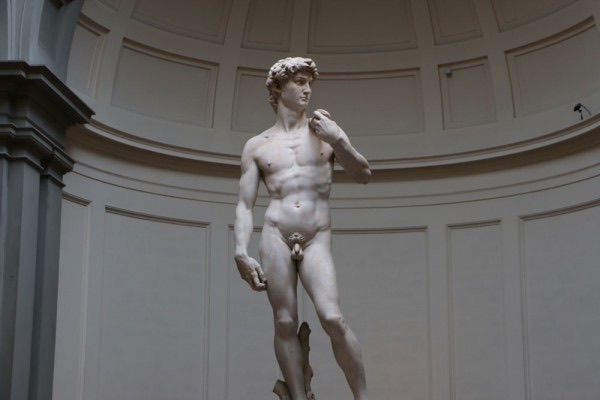
This guide covers exactly what each artist has at the Uffizi, why their rooms stop people mid-stride, the order that makes the story land, and one clarification that saves a lot of confusion at the ticket gate: Michelangelo's David is not here. Practicalities are cross-checked against the official Uffizi website (uffizi.it) — €25 same-day / €29 advance, open Tuesday–Sunday 8:15–18:30.
Quick Summary: The Three Giants at a Glance
| Artist | Works at the Uffizi | Era they define | Where on the route |
|---|---|---|---|
| Leonardo da Vinci (1452–1519) | Annunciation (c. 1472) · Adoration of the Magi (1481) | Early Renaissance turning into something new | Early-mid route |
| Michelangelo (1475–1564) | Doni Tondo (c. 1506) — his only surviving completed panel painting | High Renaissance | Mid route |
| Caravaggio (1571–1610) | Medusa (c. 1597) · Bacchus (c. 1596–97) · Sacrifice of Isaac (c. 1603) | Baroque | Late route |
Leonardo da Vinci at the Uffizi: The Mind Made Visible
Leonardo left fewer than twenty paintings in the world, which makes the Uffizi's two an event. The Annunciation (c. 1472) is the work of a painter in his early twenties, trained in Verrocchio's Florentine workshop, already doing things nobody taught him. The angel Gabriel's wings are studied from real birds. The Virgin's marble lectern is rendered with a sculptor's precision. And behind them the landscape dissolves into blue-grey distance — the atmospheric perspective that would become his signature, here in its first full statement.
The Adoration of the Magi (1481) was commissioned by Florentine monks and abandoned, unfinished, when Leonardo left for Milan. What survives is extraordinary precisely because it's incomplete: a monochrome storm of underdrawing where you can watch him compose — rearing horses, agitated onlookers, ghost figures sketched and reconsidered — all spiralling around a serene Madonna. Most finished paintings hide their thinking. This one is thinking, caught on wood.
What to look for: in the Annunciation, the angel's cast shadow on the lawn and the seaport in the far distance; in the Adoration, the difference between the nearly-finished figures and the barely-begun ones — a masterclass in how a Renaissance panel was actually built.
Michelangelo at the Uffizi: The Doni Tondo
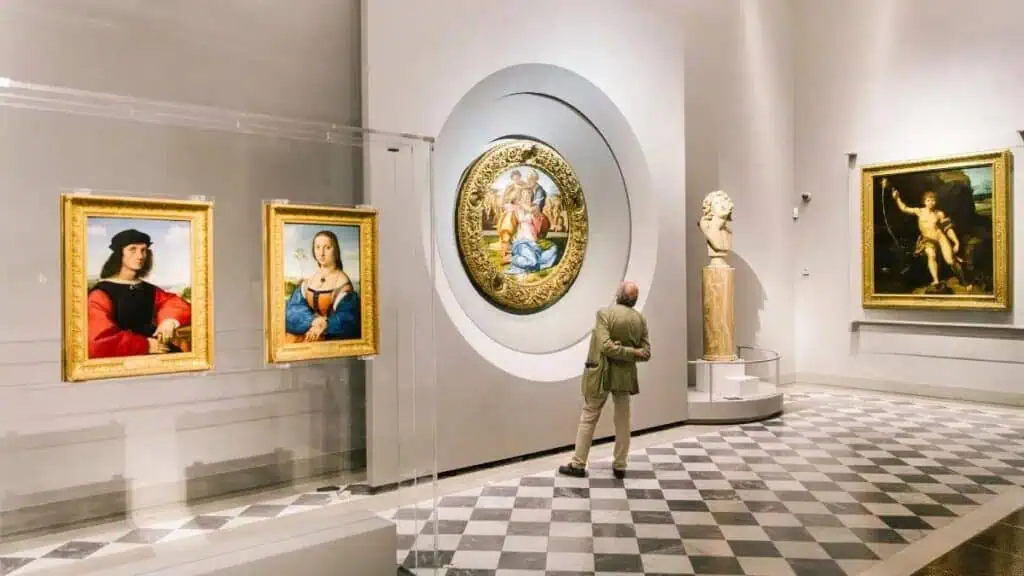
Michelangelo considered himself a sculptor, painted panels reluctantly, and finished almost none of them — which is why the Doni Tondo (c. 1506) matters so much. It is his only surviving completed panel painting anywhere on earth. Painted for the Florentine merchant Agnolo Doni, it shows the Holy Family as a single twisting spiral: Mary reaches back over her shoulder for the Christ child, muscles articulated like carved marble, in colours so sharp they look almost modern.
Everything about it is deliberately difficult. The pose is a sculptural corkscrew no other painter would have attempted. The five nude youths lounging in the background have been puzzled over for five centuries — pagan humanity before Christ is the classic reading. And the magnificent carved frame, most likely made to Michelangelo's design, is part of the work, with heads emerging from it that lock into the painting's geometry. This panel is the direct ancestor of the Sistine Chapel ceiling, begun a couple of years later: same muscular bodies, same electric colour.
What to look for: Mary's right arm — sculpted, not just painted; the acid orange-pink of Joseph's robes; and the frame's five carved heads. Stand back far enough to see painting and frame as one object.
Caravaggio at the Uffizi: Three Shocks in a Row
A century after the Doni Tondo, Michelangelo Merisi da Caravaggio detonated the rulebook, and the Uffizi holds three of the charges. The Medusa (c. 1597) is painted on a convex ceremonial shield: the Gorgon's severed head at the instant of death, snakes still writhing, mouth torn open in a scream you can almost hear. The convex surface pushes the head out into your space, and many scholars read the horrified features as Caravaggio's own face in a mirror.
Bacchus (c. 1596–97) plays the opposite game — seduction instead of horror. The god of wine is a fleshy Roman teenager with grubby fingernails and a drinker's flush, holding out a glass of wine as if you'd just sat down at his table. The fruit bowl in front of him is starting to rot: a still-life memento mori hiding inside a party picture. The Sacrifice of Isaac (c. 1603) completes the trio with pure Baroque terror — Abraham's knife, the angel's arresting hand, and Isaac's scream lit like a police searchlight.
What to look for: the blood spraying from the Medusa's neck against the shield's green; the smudged reflections in Bacchus's wine carafe; the way all three pictures use darkness as a stage set — light doesn't fall in Caravaggio, it strikes.
Three Artists, Three Eras: Why This Museum Tells the Whole Story
Walked in order, these six paintings compress two centuries of art history into one route:
- Leonardo — the early Renaissance breaking its own limits. Perspective, anatomy and observation pushed until painting becomes a form of research.
- Michelangelo — the High Renaissance at maximum tension. The Doni Tondo treats the human body as the vehicle for every idea, difficulty as a virtue in itself.
- Caravaggio — the Baroque throwing out idealism. Real bodies, dirty fingernails, theatrical light; sacred stories cast with people from the street.
Because the Uffizi hangs its collection chronologically, you don't need to engineer this narrative — just follow the rooms and you'll walk from Leonardo's mist to Caravaggio's spotlight in the intended order, with Botticelli and Raphael filling the gaps between.
Suggested Viewing Order
- Start at the route's beginning — Giotto and the gold-ground rooms take minutes and make Leonardo's leap legible.
- Leonardo room: Annunciation first, then the Adoration — finished vision, then the workshop of the mind. Go early; this room bottlenecks by 10:00.
- Doni Tondo with the High Renaissance rooms — pair it with Raphael's Madonna of the Goldfinch, painted the same years, to see two geniuses solving the same decade differently.
- Corridor pause: the Tribuna doorway (Medici Venus) and the windows over the Arno and Ponte Vecchio.
- Caravaggio rooms last — the natural climax of the walk, and typically calmer than the Botticelli crush.
Total time for the three artists alone: under an hour. With the full route, plan 2.5–4 hours — our inside the gallery guide maps the layout floor by floor.
Tickets: Seeing All Three Without the Queue
Per the official Uffizi website (uffizi.it), entry is €25 same-day or €29 booked in advance, with EU citizens 18–25 at €2 and under-18s free; the official audioguide is €6. On Tiqets, reserved entry with audio guide runs from €25 and a guided tour from €62 — worth considering for these rooms specifically, since the wall labels won't tell you why the Adoration is unfinished or whose face screams on the shield. Compare every option in our ticket prices guide, or go straight to skip-the-line tickets if you're visiting April–October. To add David at the Accademia, the Uffizi + Accademia combo (from €69.50 on Tiqets) covers both museums.
Skip the ticket-office queue
Compare timed-entry tickets, audio guides and tours with instant confirmation and free cancellation on most options.
Beyond the Big Three: Giants Worth the Detour
Building an itinerary around three names is smart; walking past the others would be a waste of the same ticket.
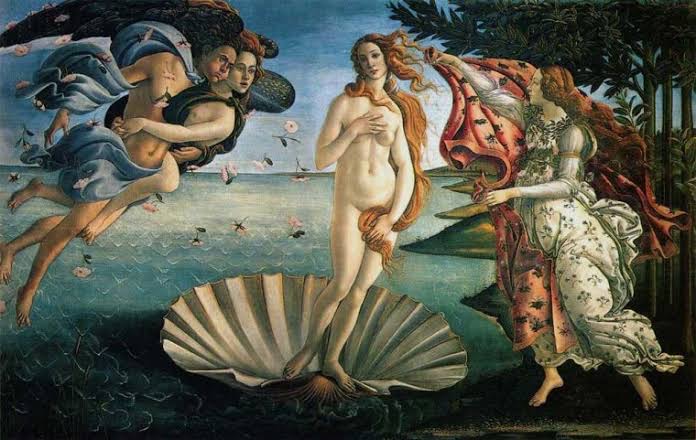
- Botticelli — Birth of Venus (c. 1485) and Primavera (c. 1480), the gallery's most famous rooms, between Giotto and Leonardo on the route.
- Raphael — Madonna of the Goldfinch (c. 1506), the serene counterpoint to the Doni Tondo hanging in the same era's rooms.
- Titian — Venus of Urbino (1538), Venetian colour against Florentine line, and the most argued-about nude in art history.
- Artemisia Gentileschi — Judith Slaying Holofernes (c. 1620), Caravaggio's lighting in the hands of the Baroque's greatest woman painter; find her near the Caravaggio rooms.
The full thirteen-painting itinerary, with a one-hour shortlist, is in our companion guide to the must-see paintings in the Uffizi.
Caravaggio, Da Vinci and Michelangelo at the Uffizi Gallery: The Bottom Line
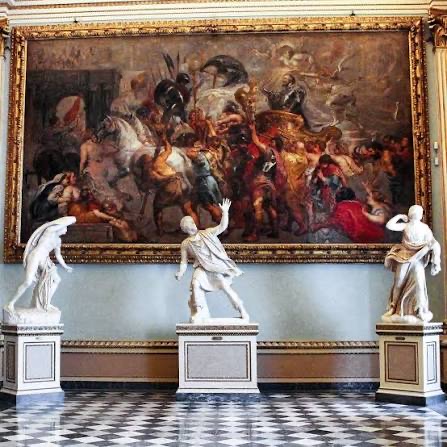
Seeing Caravaggio, da Vinci and Michelangelo at the Uffizi Gallery takes one timed ticket and a bit of sequencing: book the 8:15 slot, take Leonardo early before his room jams, treat the Doni Tondo as the only chance you'll ever get to see a completed Michelangelo panel painting, and let the three Caravaggios end the visit on a jolt. Skip the myth — David lives at the Accademia, and a combo ticket solves that in one purchase. Book ahead, especially April–October, and the three greatest names in Italian art are yours in a morning.
Frequently Asked Questions
Which Caravaggio paintings are in the Uffizi Gallery?
Three: the Medusa (c. 1597), painted on a ceremonial shield; Bacchus (c. 1596–97), the flushed young wine god; and the Sacrifice of Isaac (c. 1603). They hang in the Baroque rooms near the end of the main route.
What Leonardo da Vinci works does the Uffizi have?
Two major paintings: the Annunciation (c. 1472), painted in his early twenties, and the unfinished Adoration of the Magi (1481), abandoned when he left Florence for Milan. The Mona Lisa is not here — it's in the Louvre.
Is there a Michelangelo painting in the Uffizi?
Yes — the Doni Tondo (c. 1506), a circular Holy Family and the only surviving completed panel painting by Michelangelo anywhere. It is the one place to see a finished Michelangelo painting outside his frescoes.
Is Michelangelo's David in the Uffizi Gallery?
No. The original David stands in the Galleria dell'Accademia on via Ricasoli, a 15-minute walk away; a free replica stands outside Palazzo Vecchio next to the Uffizi. Combo tickets covering both museums start from €69.50 on Tiqets.
Can I see all three artists' works in one visit?
Easily. The route is chronological: Leonardo comes early, Michelangelo's Doni Tondo mid-route with the High Renaissance rooms, and Caravaggio near the end. Seeing all six paintings properly takes well under an hour of a 2.5–4 hour visit.
Do I need a guided tour to appreciate these rooms?
No, but context helps more here than anywhere else in the gallery — the labels are brief. A guided tour (from €62 on Tiqets) or the official €6 audioguide covers the stories: Leonardo's unfinished panel, the Doni Tondo's strange nudes, Caravaggio's shield.
Which other artists at the Uffizi are worth a detour?
Botticelli (Birth of Venus, Primavera), Raphael (Madonna of the Goldfinch), Titian (Venus of Urbino) and Artemisia Gentileschi (Judith Slaying Holofernes) are the strongest supporting cast — all on the same main route.
When is the best time to see the Caravaggio and Leonardo rooms?
At the 8:15 opening or after 16:00. The Leonardo room bottlenecks with tour groups from mid-morning; the Caravaggio rooms, later on the route, stay calmer but fill by midday. Weekdays November–February are quietest.
Prices and opening hours mentioned on this page are based on the official Uffizi website (uffizi.it) and reseller listings at the time of writing. They can change without notice — always double-check on the official website before you travel.